Events

Deadly Floods Devastate Central Nigeria
Torrential pre-dawn rains triggered catastrophic flooding in the town of Mokwa, in Nigeria’s Niger State, submerging large areas and killing over 110 people. . Thousands of homes were engulfed or destroyed as floodwaters swept through markets and villages, with many residents still missing. Local authorities reported that more than 115 bodies had been recovered by May 30, with the toll expected to rise as rescue efforts continued. This was one of the deadliest flood disasters in Nigeria’s recent history, illustrating the growing impacts of extreme weather in West Africa. Officials and experts linked the severity of the flooding to climate change – pointing to a pattern of prolonged dry spells followed by intense rainfall that overwhelms communities The tragedy underscored the urgent need for climate resilience infrastructure in developing regions and foreshadowed the human toll of global warming, as Nigeria and other nations face more frequent climate-driven disasters.

Massive Russian Air Assault on Ukraine
Russia launched its largest air attack on Ukraine since the war began, bombarding multiple cities (including Kyiv) overnight with an unprecedented salvo of 69 missiles and nearly 300 Iranian-made Shahed drones . The massive strike killed at least 14 people and injured dozens, despite Ukraine’s air defenses. This assault came just days after tentative peace talks, underscoring the fragility of any de-escalation efforts The sheer scale of this attack marked a grim milestone in the Russia–Ukraine war, demonstrating Moscow’s continued capacity and willingness to escalate despite international pressure. It highlighted the conflict’s ongoing intensity in its third year and the severe threat to Ukrainian civilians and infrastructure. The timing – amid fledgling peace overtures – suggested that achieving a durable ceasefire would be difficult, keeping Europe on edge and global energy and food security at risk due to the protracted war.

AI Video Generation Breakthrough (Google’s Veo 3)
Google DeepMind unveiled “Veo 3,” an advanced AI model capable of generating high-definition videos complete with sound effects, music, and dialogue. Demonstrations showed AI-generated video clips that most viewers could hardly distinguish from real footage made by human filmmakers . The model follows complex prompts with remarkable realism – maintaining accurate lip-sync and human-like details (even five-fingered hands) – marking a significant leap forward in generative AI technology Veo 3’s debut stunned observers with its lifelike results and also raised alarm over the blurring line between reality and synthetic content . Probable impact : empowers creative industries with new tools, but also fuels concerns about deepfakes and misinformation, as AI can now produce convincing fake videos at scale. The advent of highly realistic AI video generation in 2025 is likely to accelerate calls for ethical guidelines and verification measures in media to address the societal implications of “indistinguishable” AI content.

Gaza War – May 2025 Offensive
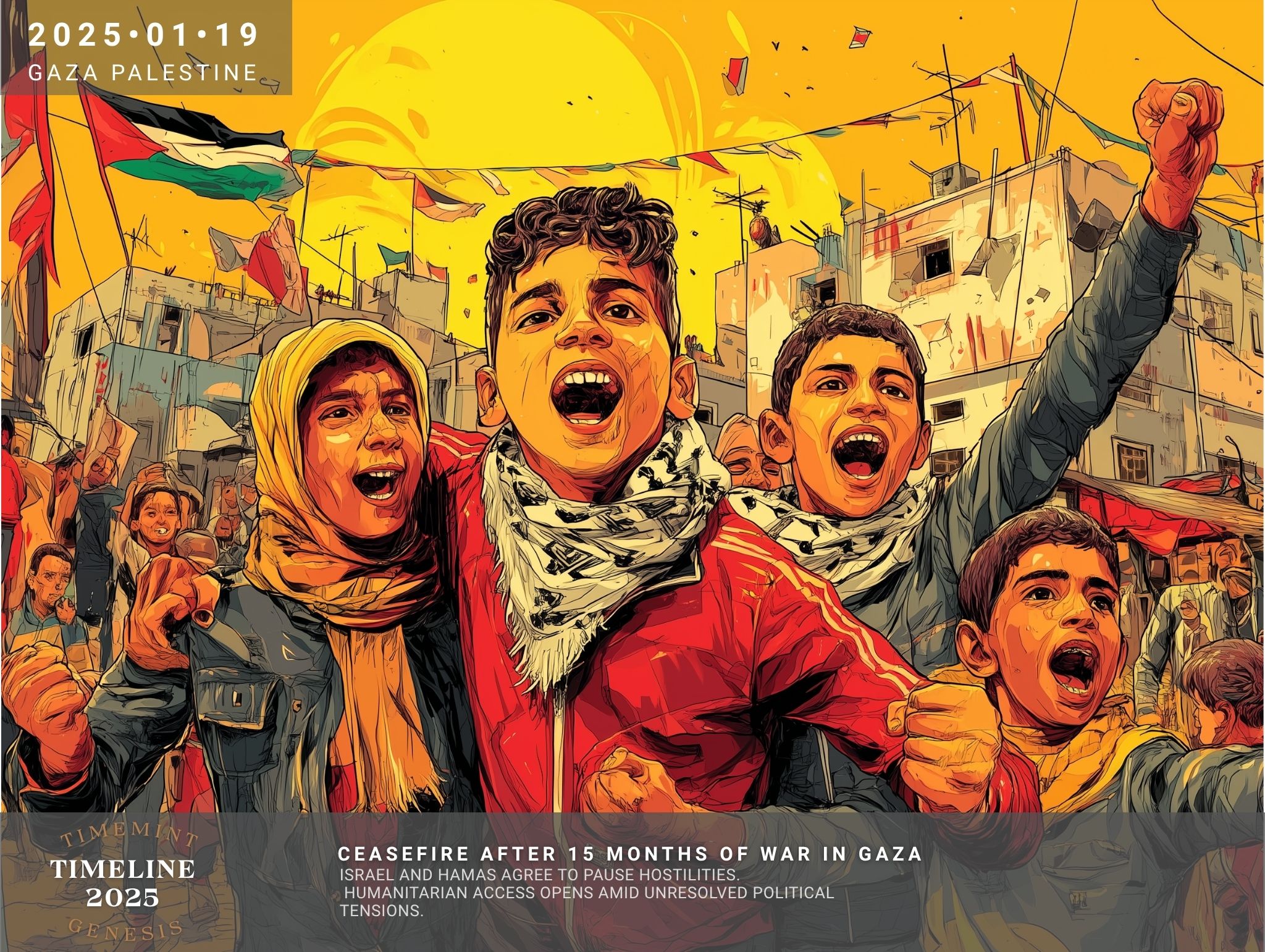
Date: Mid-May 2025 (peaking around May 18–21, 2025) Amid the ongoing Gaza War, Israeli forces launched a major offensive in May, conducting intense airstrikes across the Gaza Strip. In one 24-hour period, over 100 Palestinians were killed in Gaza by Israeli strikes, including many civilians, as Israel targeted militant infrastructure. Concurrently, Israel’s government signaled plans to indefinitely control large parts of Gaza, moving the population southward, as a condition for ending the war. This escalation represented one of the deadliest phases of the Gaza conflict since it began in 2023, worsening an already dire humanitarian crisis. The high casualty toll and Israel’s declaration to retain control of much of Gaza indicated a protracted conflict with potential for regional spillover. It also intensified international debates over human rights and post-war governance in Gaza, shaping the prospects for any future peace or two-state solution.

Global Hunger Reaches Record High
A United Nations-backed report revealed that acute global hunger hit a new high in 2024, with more than 295 million people facing crisis-level food insecurity across 53 countries. \ \ . This 2025 Global Report on Food Crises showed that the number of people suffering acute hunger rose for the sixth year in a row, increasing 5% from the previous year\ . The worst-affected areas included conflict zones like Gaza, Sudan, Yemen, and parts of Africa’s Sahel, where communities experienced “catastrophic” famine conditions.\ \ **Why It Matters (long-term impact):** . The report warned that conflicts, extreme weather events, and economic shocks are converging to drive unprecedented levels of hunger worldwide . UN Secretary-General António Guterres called the findings an “unflinching indictment of a world dangerously off course,” highlighting how war (e.g. in Sudan and the Middle East) and climate-induced disasters are reversing years of progress in poverty reduction . This grim milestone in May 2025 underscored the urgent need for international action on conflict resolution, climate adaptation, and humanitarian aid to prevent a further escalation of the global food crisis.

Death of José “Pepe” Mujica
José Mujica – former President of Uruguay (2010–2015) and an iconic leftist leader – died at the age of 89 in Montevideo. . A former guerrilla fighter turned statesman, Mujica was internationally admired for his humble lifestyle (famously driving an old VW Beetle) and progressive reforms. During his presidency he legalized cannabis, as well as same-sex marriage and broad abortion rights, policies that were pioneering in socially conservative Latin America. Mujica’s passing marked the end of an era for Uruguay and Latin American politics. Revered as the “world’s poorest president” for eschewing luxury, he became a global symbol of integrity and social progressivism in governance. World leaders and citizens alike mourned him, reflecting on how his legacy – championing social justice, simplicity in leadership, and bold policy experiments – continues to inspire movements for compassionate, reformist politics worldwide.

U.S.–China Trade War Truce
Washington and Beijing reached a limited agreement to ease their ongoing trade war, hammering out a deal to suspend or reduce certain tariffs for 90 days. . This temporary truce, reportedly agreed to by the Trump administration and Chinese negotiators, was intended to create space for further trade talks over the summer. It came as a notable thaw in U.S.–China tensions, which had seen elevated tariffs and retaliations disrupting global trade since 2018. Probable impact : The 90-day tariff pause marked a rare de-escalation in the U.S.–China economic standoff, offering relief to markets and exporters worldwide . While short-lived, it signaled that dialogue was possible between the world’s two largest economies, potentially laying groundwork for a more comprehensive trade settlement. Global investors and trading partners watched this truce closely, as its success or failure would influence economic stability, supply chains, and U.S.–China relations moving forward.
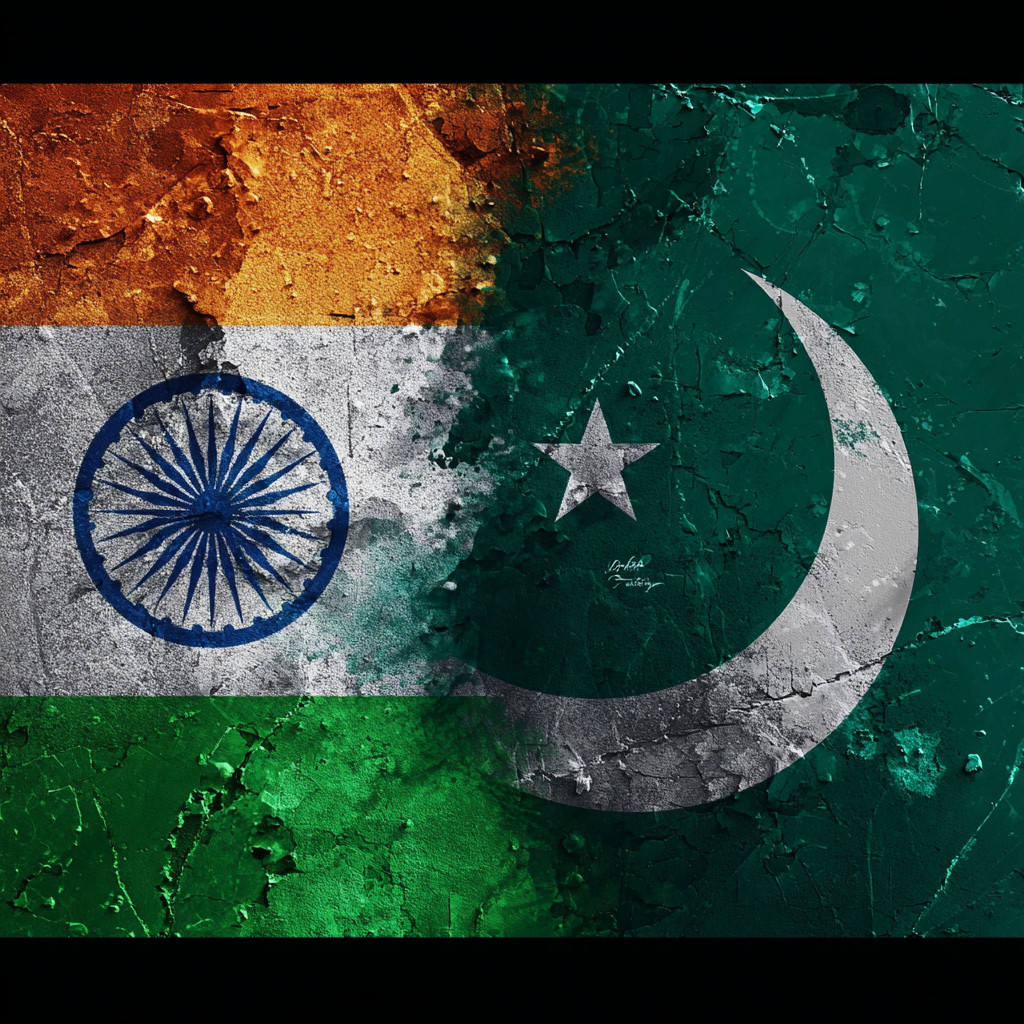
India–Pakistan “Four-Day War” and Ceasefire
In early May, a terrorist attack led to a sudden military escalation between India and Pakistan. Over four days, both nuclear-armed nations carried out unprecedented cross-border strikes – India using cruise missiles and Pakistan responding with ballistic missiles – marking their fiercest confrontation in decades. The crisis culminated on May 10 with a U.S.-brokered ceasefire announced by President Donald Trump, though sporadic clashes continued even after the agreement. This was the most serious India–Pakistan conflict since the 1999 Kargil War, crossing new thresholds in range and weaponry. The four-day war raised global fears of a broader war between two nuclear powers and highlighted the role of international diplomacy in defusing such crises. It underscored enduring volatility in South Asia and the urgent need for mechanisms to manage India–Pakistan tensions to prevent future escalations.

Ceasefire in the Red Sea Conflict
In a flare-up linked to the Yemen crisis and the Gaza War, Israeli forces carried out airstrikes on Yemen’s Houthi-controlled territory in early May, including an attack that damaged Sana’a International Airport and destroyed several Yemenia airliners. . Shortly thereafter, the United States – with Oman mediating – announced a ceasefire agreement with the Houthi rebels to halt hostilities around the Red Sea . The Houthis agreed to stop attacks on shipping lanes in the Red Sea, while the U.S. halted its own airstrikes, effectively defusing a rapidly escalating regional confrontation Probable impact : . The quick U.S.-brokered truce averted a broader war front in the Middle East beyond Gaza, protecting a critical global shipping route from further disruption. It demonstrated the efficacy of diplomatic intervention in containing a conflict that involved multiple parties (Israel, Iran-backed Houthis, and the U.S.) during an already tense period . The ceasefire cooled the “Red Sea crisis,” preventing further casualties and economic fallout, and may serve as a blueprint for resolving similar proxy flashpoints through negotiation rather than open warfare.